
Reasons to invest in Dubailand properties include a wide selection of residential developments, different property price points, family-friendly communities, road connectivity, and opportunities to explore both ready homes and off-plan projects. Located within Dubai’s expanding urban landscape, Dubailand attracts buyers interested in modern apartments, townhouses, villas, and long-term real estate opportunities.
Whether you are a first-time property buyer, an overseas investor, or a homeowner looking for a spacious residence, Dubailand offers several types of properties to compare. The area includes established residential communities as well as newer developments designed around green spaces, recreational facilities, and modern amenities.
However, choosing the right property requires more than identifying a growing neighbourhood. Buyers should compare purchase prices, rental demand, ownership costs, developer credentials, and future supply before making an investment decision.
In this guide, Dubai Luxury Deals explores the main reasons to invest in Dubailand properties, the residential communities worth researching, and the important factors to consider before buying real estate in Dubai.
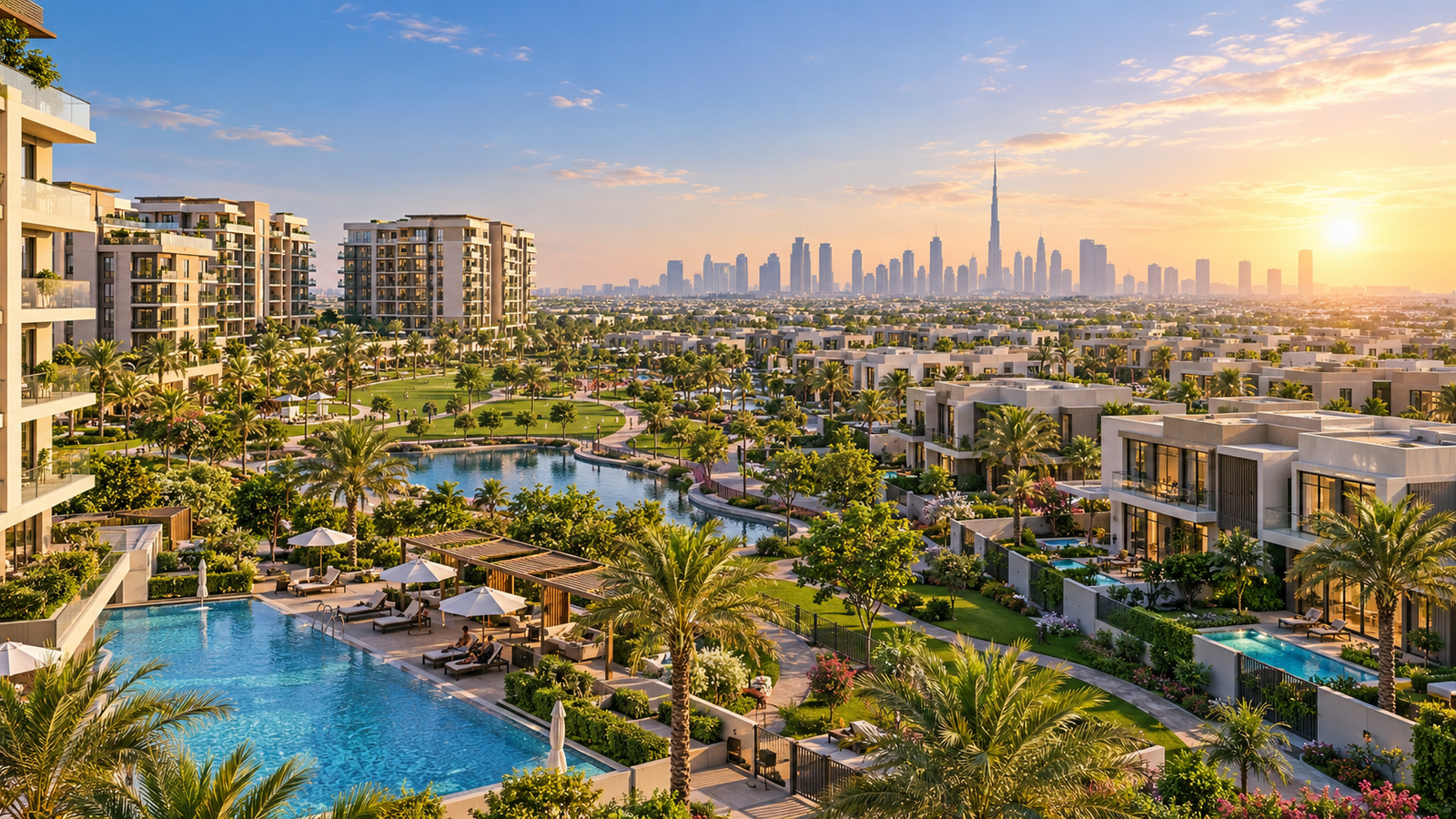
What Is Dubailand?
Dubailand is a broad area associated with residential communities, leisure attractions, retail destinations, and mixed-use developments across Dubai. Rather than being a single neighbourhood, it encompasses a range of communities with different property types, facilities, and price points.
The wider area includes apartment developments, townhouse communities, villa neighbourhoods, and master-planned residential projects. Depending on the location, residents may have access to schools, supermarkets, parks, shopping destinations, and major road networks.
This variety makes Dubailand worth considering for buyers with different requirements. Someone looking for a compact apartment may have different priorities from a family searching for a villa or an investor comparing rental properties.
Before choosing a development, confirm its exact location. Properties marketed under the broad Dubailand designation can have different levels of access to public transport, retail facilities, schools, and business districts.
10 Reasons to Invest in Dubailand Properties
1. A Wide Range of Property Prices and Types
One of the main reasons to invest in Dubailand properties is the variety of homes available across its residential communities.
Buyers can explore different property types, including:
- Studio apartments for individuals and first-time buyers.
- One-bedroom apartments for professionals and couples.
- Two-bedroom and three-bedroom apartments for larger households.
- Townhouses for buyers seeking additional living space.
- Villas for families who prefer greater privacy and outdoor areas.
The purchase price depends on the development, unit size, location, building quality, amenities, and whether the property is ready or off-plan.
For investors, this variety provides an opportunity to compare different entry costs and potential tenant profiles. For homeowners, it allows them to choose a property that matches their lifestyle and financial position.
Instead of selecting a property based only on its advertised starting price, compare the total cost of ownership and the price per square foot against similar properties.
2. Potential for Rental Income
Rental income is an important consideration for investors evaluating Dubailand properties.
Apartments may appeal to professionals, couples, and smaller households, while townhouses and villas may suit families seeking more bedrooms and living space. The demand for each property type varies according to the specific community, transport access, nearby employment areas, amenities, and competing rental supply.
Before purchasing a property for rental income, research comparable rental transactions and current listings. Consider the likely tenant profile and how the property compares with similar homes in the area.
Investors should also calculate net rental returns rather than relying only on advertised gross yields.
Account for service charges, maintenance, insurance, property management, vacancy periods, and other expenses. Rental income is not guaranteed, and performance can change with market conditions.
3. Access to Major Road Networks
Connectivity is another factor that makes Dubailand worth exploring.
Several communities within the wider area have access to major roads, including Sheikh Mohammed bin Zayed Road (E311), Emirates Road (E611), and Dubai–Al Ain Road (E66).
These routes connect different parts of Dubai and can be useful for residents travelling to employment districts, shopping destinations, schools, and leisure attractions.
However, the actual commuting experience depends on the property’s precise location and the destination. Buyers should check travel times during their usual commuting hours rather than relying solely on advertised distances.
If public transport is important to you, verify the nearest operating metro or bus service. Do not assume that a planned transport project will be completed by a particular date or directly serve your chosen development.
4. Family-Friendly Residential Communities
Dubailand includes residential developments designed around family living.
Depending on the community, amenities may include landscaped parks, children’s play areas, swimming pools, walking paths, sports facilities, and shared recreational spaces.
Larger homes may provide additional bedrooms, private gardens, or outdoor areas that suit family routines. Some apartment communities also offer facilities that make everyday living more convenient.
Families should compare more than the property itself. Nearby schools, healthcare facilities, supermarkets, childcare options, and road access can have a significant effect on daily life.
Visit the neighbourhood, inspect the available amenities, and confirm which facilities are operational before deciding where to buy.
5. Opportunities to Buy Off-Plan Properties
Off-plan developments are another reason investors explore Dubailand.
An off-plan property is purchased before construction is completed. Depending on the development, buyers may be able to choose from different layouts and follow a staged payment schedule.
Potential advantages include access to newly designed residences, modern building facilities, and the opportunity to purchase before completion. However, these benefits must be weighed against construction, delivery, and market risks.
Before purchasing an off-plan property, investigate:
- The developer’s credentials and delivery record.
- The project’s registration and applicable escrow arrangements.
- The sale and purchase agreement.
- The payment schedule and any post-handover obligations.
- The expected completion date and contractual provisions for delays.
- The specifications and amenities included in the purchase.
A payment plan should not be the only reason to buy a property. Compare the total price, competing developments, and likely resale or rental demand before committing.
6. A Choice of Established and Emerging Communities
Dubailand offers buyers a mix of established residential neighbourhoods and developing communities.
Established areas may provide a clearer picture of current rental demand, occupied buildings, available amenities, and resale transactions. Newer developments may offer modern layouts, recently designed facilities, and different payment options.
Each type presents different considerations.
With an established property, buyers can inspect the actual building and research comparable rental transactions. With a new or off-plan property, buyers need to pay particular attention to construction progress, delivery timelines, and the planned community infrastructure.
The best choice depends on your objectives, financial circumstances, and tolerance for risk.
7. Modern Amenities and Lifestyle Facilities
Many residential developments in Dubailand are designed to provide more than a place to live.
Depending on the project, residents may have access to swimming pools, fitness centres, landscaped gardens, sports facilities, children’s play areas, and community gathering spaces.
Villa communities may also provide private outdoor areas and additional living space, while apartment buildings may offer shared facilities and building management services.
These amenities can influence the property’s appeal to potential residents and tenants. However, they can also contribute to service charges and maintenance costs.
When comparing properties, ask which facilities are included, whether they are operational, and what the annual service charges cover.
8. Opportunities for Different Investment Strategies
Dubailand can be researched by buyers with different property investment strategies.
Long-term rental investment: Buyers may look for properties that appeal to households seeking stable accommodation. Important factors include tenant demand, property condition, service charges, and the purchase price relative to achievable rent.
Capital growth strategy: Investors may focus on locations where infrastructure, community facilities, and demand could support future value. Appreciation is never guaranteed, and prices can also decline.
Ready-property investment: Purchasing an existing property allows buyers to inspect the unit and investigate current rental transactions before committing.
Off-plan investment: Buyers may prefer a new development and staged payments, but they must assess construction and handover risks carefully.
Personal homeownership: Some buyers prioritise space, schools, amenities, and commuting convenience rather than rental yield.
Choose your strategy before selecting a property. A home that works well for personal use may not necessarily deliver the best investment return.
9. Dubai’s International Property Market
Dubai attracts residents, businesses, and property buyers from many countries. Its international business environment, infrastructure, lifestyle attractions, and real estate market make it a destination for both local and overseas property investors.
Dubai Land Department reported that Dubai’s real estate transactions reached AED 252 billion in the first quarter of 2026, a 31% year-on-year increase in transaction value. This is an indicator of activity across Dubai’s overall property market, not a guarantee of performance in Dubailand or any individual development.
Investors should use official market data alongside local property comparisons to understand conditions in their chosen neighbourhood.
For international buyers, it is also important to understand ownership eligibility, transaction costs, financing arrangements, and any legal or tax considerations that may apply in their country of residence.
10. Potential for Long-Term Property Ownership
Some buyers consider Dubailand because they want a home that can meet their needs over several years.
A suitable apartment, townhouse, or villa may provide a base for family life, work, and everyday activities. The value of the property to its owner may therefore extend beyond short-term price movements.
Long-term buyers should consider whether the property has an appropriate layout, sufficient living space, convenient access to essential services, and manageable ongoing expenses.
Investors should also assess future resale prospects, the supply of competing properties, and the possibility that their financial needs may change.
A long-term ownership strategy works best when the property is affordable and suitable for the intended purpose, rather than relying on assumptions about future price increases.
Top Residential Communities to Explore in Dubailand
The wider Dubailand area includes several communities that buyers may wish to research. The following examples represent different residential styles and property types.
1. Villanova by Dubai Properties
Villanova is a residential community associated with Dubai Properties, featuring townhouses and villas designed for family living.
Buyers may wish to explore the community if they are looking for multiple bedrooms, outdoor space, and a residential setting with shared amenities.
What to consider:
- Available townhouse and villa layouts.
- Plot size and usable internal area.
- Community facilities and service charges.
- Current resale prices and rental transactions.
- Access to schools, shops, and major roads.
Confirm the status of the specific phase and property before purchasing.
2. DAMAC Hills
DAMAC Hills is a residential community featuring villas, townhouses, apartments, and golf-oriented lifestyle amenities.
The range of property types allows buyers to compare different home sizes and price points within a recognised residential destination.
What to consider:
- The location of the property within the community.
- Access to golf, parks, and recreational facilities.
- Annual service charges and maintenance.
- Comparable sale prices and rental demand.
- Whether the selected property is ready or off-plan.
Do not assume all homes within the community offer the same amenities or investment performance.
3. Tilal Al Ghaf
Tilal Al Ghaf is a master-planned residential community by Majid Al Futtaim, known for its emphasis on contemporary homes, landscaped surroundings, and lifestyle facilities.
It may appeal to buyers looking for premium townhouses or villas and a community-oriented residential environment.
What to consider:
- Available property types and current pricing.
- Layout, plot size, and outdoor space.
- Community charges and maintenance obligations.
- Accessibility to workplaces and daily essentials.
- The costs associated with premium amenities.
Buyers should compare its overall cost with similar villa and townhouse communities before making a decision.
4. Belgrave Gardens by Ellington Properties
Belgrave Gardens is a residential development worth researching for buyers interested in contemporary apartments within the wider Dubailand market.
Its design-led residential positioning may appeal to buyers who prioritise apartment layouts, interior specifications, and shared facilities.
What to consider:
- Current unit availability.
- Floor plans and usable area.
- Furnishing and finish specifications.
- Payment terms and construction progress.
- Expected handover and service charges.
Confirm the latest project details directly with the developer or an authorised sales representative.
5. Sobha Elwood
Sobha Elwood is a villa-focused development associated with Sobha Realty and a nature-oriented residential concept.
It may be relevant to buyers looking for larger homes, landscaped surroundings, and a premium community setting.
What to consider:
- Available villa configurations.
- Plot size and building specifications.
- The total purchase price.
- Construction status and expected handover.
- Ongoing maintenance and community charges.
Buyers should review the official project documentation and compare similar properties before making an investment decision.
6. DAMAC Islands
DAMAC Islands is a master-community development featuring a range of villa and townhouse options associated with a resort-inspired lifestyle concept.
It may appeal to buyers seeking larger homes and community facilities rather than a conventional apartment.
What to consider:
- The exact phase and property type.
- Available layouts and plot dimensions.
- Payment plan and contractual obligations.
- Construction progress and delivery timeline.
- Service charges and long-term ownership costs.
Confirm whether the particular unit is available and verify all specifications before committing.
Important: The communities above vary in precise location, property type, and development status. Some are in the broader Dubailand market rather than a single central neighbourhood. Verify each project’s official location and current availability before comparing prices or travel times.
How to Evaluate a Dubailand Property Investment
Selecting a development is only the beginning. A property investment should be evaluated using realistic assumptions and the full cost of ownership.
1. Calculate the Total Purchase Cost
Include the property’s price, applicable Dubai Land Department fees, registration costs, agency commission where applicable, mortgage-related charges, and furnishing expenses.
For off-plan properties, map out every payment milestone and check when payments become due.
2. Research Comparable Properties
Compare similar properties in the same community, taking account of size, layout, age, floor, condition, facilities, and location.
An advertised starting price may not represent the price of the unit you want to purchase.
3. Estimate Net Rental Returns
Use this basic approach:
Gross rental yield
Annual rent divided by purchase price, multiplied by 100.
Net rental yield
Annual rental income after relevant operating expenses, divided by the total investment cost, multiplied by 100.
For example, a property purchased for AED 1,000,000 and rented for AED 70,000 annually has a gross rental yield of 7%. This is an illustrative calculation, not a market estimate or a guarantee of future income.
Actual net returns will be lower if service charges, maintenance, vacancy, management fees, and other expenses apply.
4. Check the Developer and Project
Review the developer’s track record, project registration, construction progress, and applicable escrow arrangements.
Read the sale and purchase agreement carefully, and confirm what happens if the project is delayed or the specifications change.
5. Understand the Local Rental Market
Research the likely tenant profile and the supply of competing units. Compare current asking rents with completed rental transactions where available.
Consider whether the property offers features that tenants value, such as a practical layout, parking, transport access, and proximity to daily essentials.
6. Consider Resale Liquidity
A property may look attractive on paper but be difficult to resell at the desired price.
Evaluate the number of comparable properties on the market, the development’s reputation, the likely buyer profile, and the overall cost of selling.
7. Seek Independent Advice
For significant property purchases, consider obtaining independent legal, financial, or property valuation advice. Buyers based outside the UAE should also check any applicable obligations in their country of residence.
Is Dubailand a Good Place to Invest in 2026?
Dubailand is worth considering for buyers who want to compare different property types and residential communities across Dubai.
Its broad selection of apartments, townhouses, villas, and new developments gives buyers several options to investigate. However, the area’s size means that location, building quality, community facilities, and access to transport can vary considerably.
Before purchasing, compare the specific property with similar options, review current rental transactions, calculate net returns, and check the developer’s record.
For off-plan investments, pay particular attention to the payment schedule, construction progress, and contractual protections. For ready properties, inspect the unit and review its condition, service charges, and recent comparable transactions.
There is no single best investment for every buyer. The right property depends on your budget, intended holding period, financial goals, and tolerance for risk.
Final Thoughts
The main reasons to invest in Dubailand properties include the variety of residential options, access to different lifestyle communities, potential rental opportunities, and the ability to compare ready homes with off-plan developments.
Communities such as Villanova, DAMAC Hills, Tilal Al Ghaf, Belgrave Gardens, Sobha Elwood, and DAMAC Islands offer different residential concepts and should be evaluated according to their actual locations, specifications, pricing, and availability.
The most important step is to look beyond promotional claims. Compare the total cost of ownership, research the developer, assess local demand, and use realistic assumptions when estimating potential returns.
At Dubai Luxury Deals, we help buyers explore residential and off-plan opportunities across Dubai and compare properties according to their requirements.
Looking to invest in Dubailand? Explore available properties through Dubai Luxury Deals and request updated prices, floor plans, payment plans, and project documentation to find a property that fits your investment strategy.
Frequently Asked Questions
1. Why invest in Dubailand properties?
Dubailand offers a variety of residential developments, including apartments, townhouses, and villas. Buyers may also find different entry prices, community amenities, and off-plan opportunities. The suitability of an investment depends on the individual property and current market conditions.
2. Is Dubailand good for rental income?
Some properties in Dubailand may appeal to tenants seeking modern homes, convenient road access, and residential amenities. Actual rental income depends on the location, purchase price, property type, competition, vacancy, and ongoing expenses.
3. Are properties in Dubailand affordable?
Property prices vary by community, developer, property type, size, and development stage. Compare the total purchase cost and price per square foot across similar properties rather than assuming that every development is affordable.
4. Can foreign investors buy property in Dubailand?
Foreign buyers can purchase eligible properties in designated freehold areas of Dubai, subject to applicable regulations and the property’s ownership status. Verify the specific property’s title and eligibility before purchasing.
5. Is it better to buy a ready property or an off-plan property?
A ready property can be inspected and evaluated against current rental transactions. An off-plan property may offer staged payments and new specifications but carries construction and delivery risks. The best option depends on your financial position, objectives, and risk tolerance.
6. What additional costs should I consider?
Potential costs include applicable Dubai Land Department fees, registration charges, agency commission where applicable, mortgage expenses, service charges, furnishing, insurance, and maintenance. Confirm the charges relevant to your transaction before budgeting.
7. Which communities should I research in Dubailand?
Buyers may research Villanova, DAMAC Hills, and other residential developments in the wider Dubailand market. Communities such as Tilal Al Ghaf and individual off-plan projects can also be compared, but buyers should verify their exact location and current availability.
8. How do I calculate the rental yield of a property?
Divide the annual rental income by the property’s purchase price and multiply by 100 to calculate gross rental yield. To estimate net yield, deduct relevant operating expenses and consider the total investment cost.
9. What should I check before buying off-plan property?
Verify the developer, project registration, applicable escrow arrangements, sale and purchase agreement, payment milestones, construction status, expected handover date, and contractual protections.
10. Where can I find Dubailand properties for sale?
You can explore residential and off-plan opportunities through Dubai Luxury Deals. Request current prices, available layouts, payment plans, and project documentation before making a purchase.
Disclaimer: This article is for general informational purposes only and does not constitute financial, legal, or investment advice. Property prices, availability, rental income, payment plans, amenities, and completion dates may change. Rental returns and capital appreciation are not guaranteed. Verify all material details with the developer and relevant authorities before purchasing.
