
When people think about the world’s most expensive countries, they often imagine luxury lifestyles, premium real estate, and thriving financial centers. While these destinations offer excellent infrastructure, safety, and career opportunities, they also come with some of the highest living expenses on the planet.
For international investors, however, expensive countries tell a much bigger story. High living costs usually indicate strong economies, limited housing supply, stable currencies, and sustained demand for quality real estate. Understanding these markets can help investors identify where property prices are likely to appreciate—and where they may find better value elsewhere.
Interestingly, while cities like Zurich, Singapore, and New York dominate global cost-of-living rankings, Dubai has emerged as a luxury destination that delivers exceptional value compared to many traditional financial capitals.
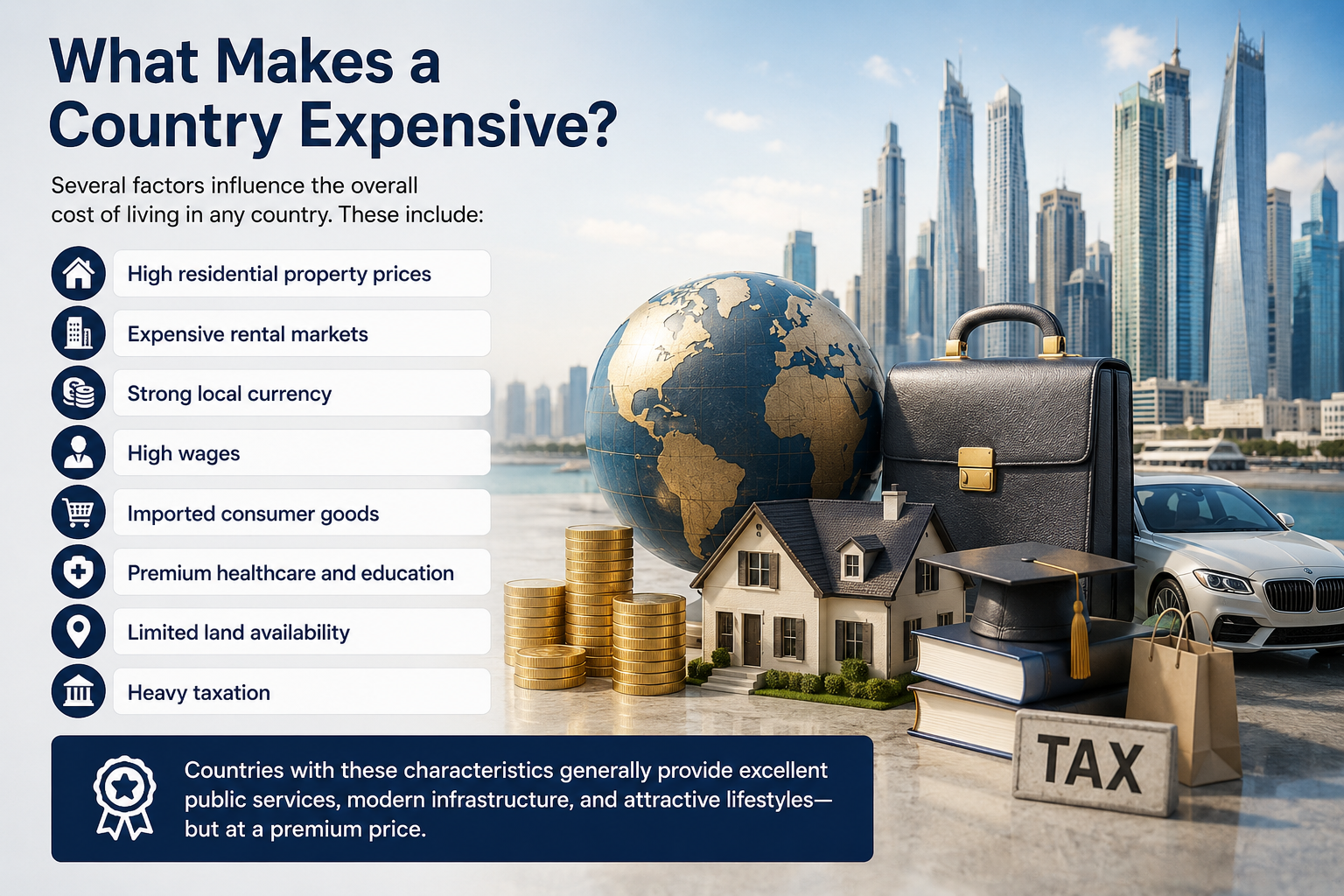
What Makes a Country Expensive?
Several factors influence the overall cost of living in any country. These include:
- High residential property prices
- Expensive rental markets
- Strong local currency
- High wages
- Imported consumer goods
- Premium healthcare and education
- Limited land availability
- Heavy taxation
Countries with these characteristics generally provide excellent public services, modern infrastructure, and attractive lifestyles—but at a premium price.
The World’s Most Expensive Countries
1. Switzerland
Switzerland consistently ranks among the most expensive countries worldwide. Cities such as Zurich and Geneva are famous for luxury living, world-class healthcare, banking, and exceptional public transport.
Why it’s expensive:
- Premium housing market
- High salaries
- Strong Swiss Franc
- Expensive dining and groceries
- Excellent quality of life
Despite the high costs, Switzerland remains one of Europe’s safest and most desirable destinations for high-net-worth individuals.
2. Singapore
Singapore has transformed itself into one of the world’s leading financial hubs. Limited land availability and strong international demand have created one of Asia’s most competitive property markets.
Major cost drivers include:
- Luxury apartments
- Vehicle ownership costs
- Imported products
- High-end education
- Premium healthcare
Although living costs are among the highest globally, investors continue to view Singapore as a stable long-term investment destination.
3. Iceland
Iceland combines breathtaking natural beauty with a relatively small population and heavy dependence on imported goods.
Living expenses are influenced by:
- Geographic isolation
- Limited housing supply
- Tourism demand
- Imported food and consumer products
Residents enjoy excellent healthcare and a high quality of life, but everyday expenses remain considerably above the global average.
4. The Bahamas
The Bahamas attracts wealthy individuals, retirees, and luxury travelers from around the world.
Its higher cost of living is mainly due to:
- Import-dependent economy
- Luxury tourism
- Waterfront real estate
- Premium lifestyle services
Exclusive island communities continue to attract international buyers looking for second homes and vacation properties.
5. Norway
Norway offers one of the world’s highest standards of living, supported by a strong economy and extensive public services.
Living costs remain high because of:
- High wages
- Elevated taxes
- Expensive housing
- Premium food prices
Although daily expenses are significant, residents benefit from excellent healthcare, education, and social welfare systems.
6. Denmark
Denmark combines modern cities with outstanding infrastructure and one of the happiest populations in the world.
High living expenses result from:
- Strong purchasing power
- High taxes
- Expensive real estate
- Premium consumer services
Copenhagen continues to attract professionals, entrepreneurs, and international investors despite its relatively high costs.
7. Hong Kong
Hong Kong has long been one of the world’s most expensive places to live, largely because of its limited land supply and strong demand for housing.
Property prices remain among the highest globally, while daily expenses such as rent, dining, and transportation also command premium prices.
8. United States
Although living costs vary significantly by state, cities such as New York, San Francisco, and Los Angeles remain among the world’s most expensive metropolitan areas.
The largest expenses typically include:
- Housing
- Healthcare
- Childcare
- Transportation
Despite these costs, the United States continues to attract global talent and investment thanks to its large economy and business opportunities.
Why Do Investors Still Choose Expensive Countries?
High living costs don’t necessarily discourage investment. In fact, they often indicate:
- Stable economies
- Strong rental demand
- High-income populations
- Limited property supply
- Long-term capital appreciation
- Excellent infrastructure
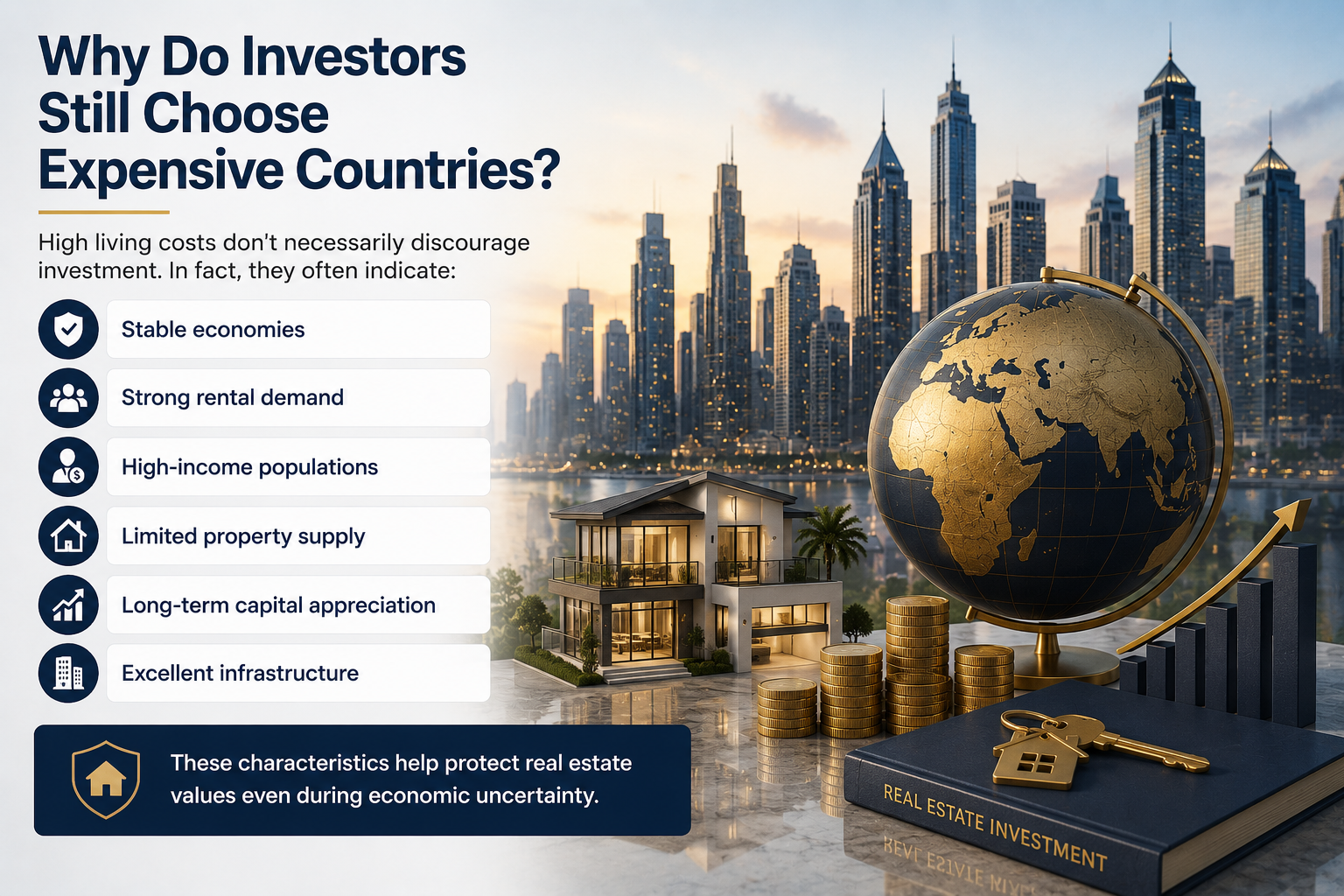
These characteristics help protect real estate values even during economic uncertainty.
Where Does Dubai Stand?
Unlike many expensive global destinations, Dubai offers a unique balance between luxury and value.
While premium communities such as Palm Jumeirah, Downtown Dubai, Dubai Marina, and Emirates Hills command world-class prices, buyers often receive significantly more space, modern amenities, and lifestyle benefits compared to cities like London, New York, Hong Kong, or Singapore.
Additional advantages include:
- No annual property tax
- No personal income tax
- Strong rental yields
- Investor-friendly regulations
- Golden Visa opportunities for eligible property investors
- Modern infrastructure
- Excellent international connectivity
Although Dubai is one of the Middle East’s most expensive cities, it remains comparatively affordable when measured against many established global financial centres.
Why UK, European and US Buyers Are Choosing Dubai
International investors increasingly view Dubai as a smarter alternative to traditional luxury property markets.
Key reasons include:
- Better value per square foot
- Attractive payment plans on off-plan developments
- Growing population
- Strong tourism sector
- High rental demand
- Safe investment environment
- Tax-efficient ownership
Instead of paying premium prices in cities where returns have slowed, many investors are diversifying their portfolios with Dubai real estate.
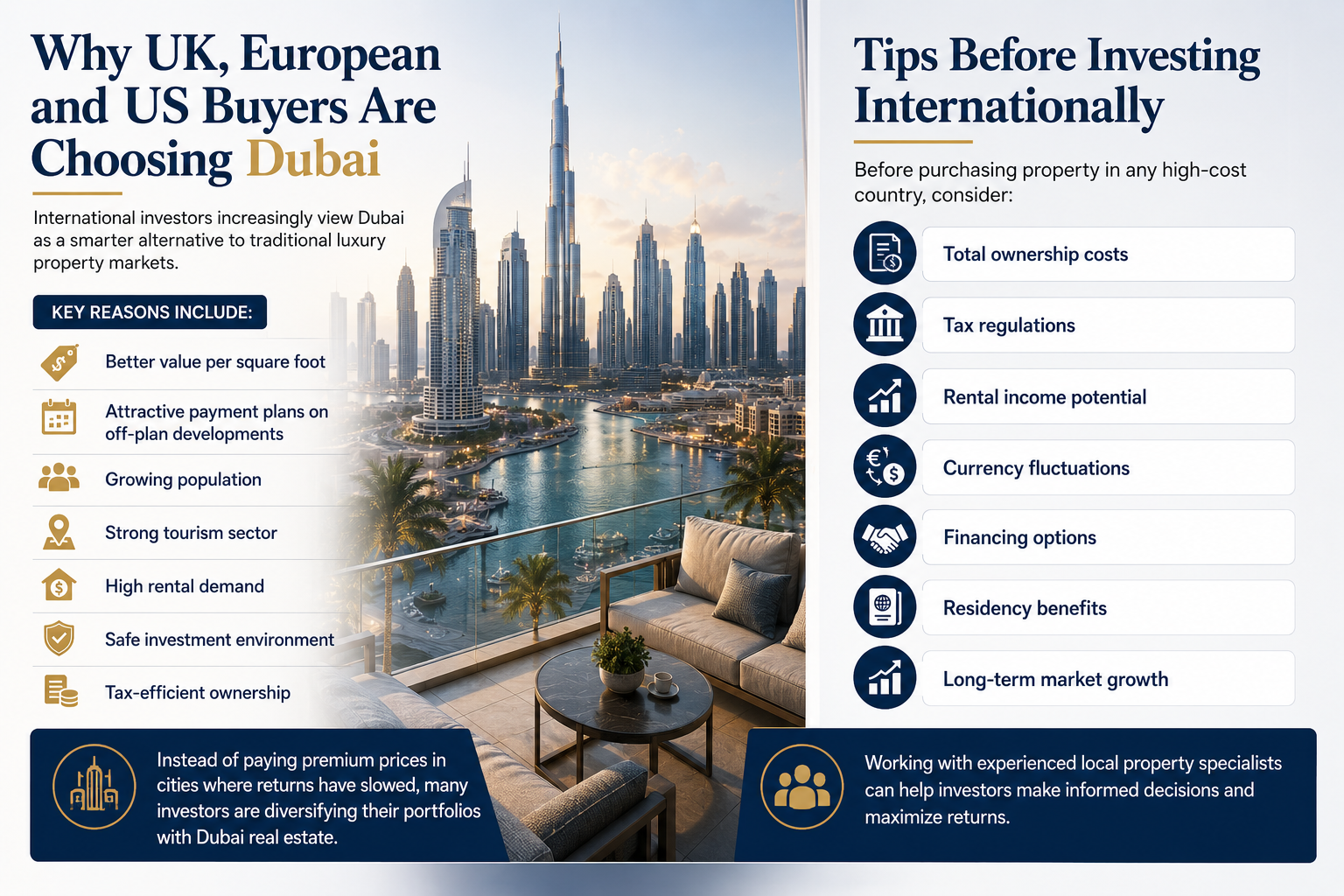
Tips Before Investing Internationally
Before purchasing property in any high-cost country, consider:
- Total ownership costs
- Tax regulations
- Rental income potential
- Currency fluctuations
- Financing options
- Residency benefits
- Long-term market growth
Working with experienced local property specialists can help investors make informed decisions and maximize returns.
Final Thoughts
The world’s most expensive countries continue to attract professionals, entrepreneurs, and property investors because they offer economic stability, outstanding infrastructure, and exceptional lifestyles. However, high living costs don’t always translate into the best investment opportunities.
For many international buyers, Dubai represents an ideal balance of luxury, affordability, tax efficiency, and long-term growth potential. While global cities continue to become increasingly expensive, Dubai offers access to premium real estate with competitive pricing, attractive rental yields, and investor-friendly policies.
Whether you’re purchasing your first overseas property or expanding an international portfolio, understanding global living costs can help you identify markets that deliver both lifestyle value and investment performance.
